

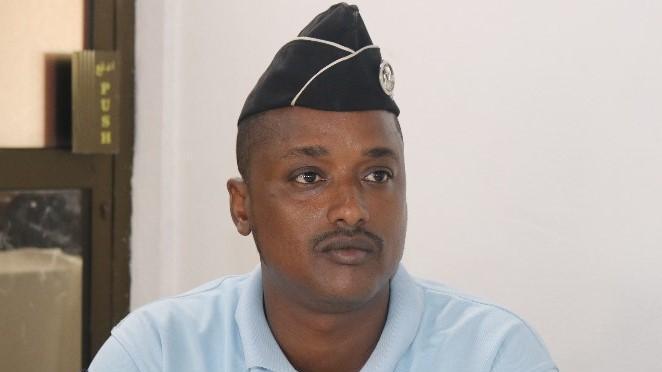
In Djibouti, some journeys go beyond a profession to become a lifelong commitment. Aleo Mohamed Aleo’s story is one of them.
An ordinary morning at the One Stop Center in Balbala. A young girl arrives, accompanied by a community relay. She is welcomed, listened to, and immediately cared for. For Aleo, moments like these bring back memories of a time when survivors had nowhere to turn.
Born on December 13, 1985, Aleo joined the gendarmerie in 2007. Trained as an Officier de Police Judiciaire (OPJ), he was quickly confronted with the reality of female genital mutilation (FGM). During his missions in Dikhil, Yoboki, and Obock, he witnessed the silent suffering of girls, often without access to appropriate care.
In the absence of specialized services, families would turn to the brigade in cases of severe complications—bleeding, infections, trauma. Aleo had to respond urgently, balancing judicial procedures with the search for medical solutions. Too often, cases went unresolved, hindered by fear, stigma, and lack of follow-up.
These experiences shaped his commitment. “You cannot remain indifferent in the face of a child’s suffering,” he recalls.
Today, at the One Stop Center—supported by the UNFPA and partners—the response has transformed. Medical, psychosocial, and legal services are integrated in one place, ensuring immediate, confidential, and survivor-centered care for GBV and FGM survivors.
For Aleo, this center represents a turning point. “Before, they moved from one service to another. Today, they are supported from the very first moment.”
Beyond his judicial role, he dedicates time to listening, guiding, and reassuring survivors. Working closely with community relays from women’s associations in Balbala, he helps strengthen prevention, referrals, and follow-up at the community level.
His message is clear:
“Breaking the silence around FGM is essential. Too many girls continue to suffer in silence.”
“If you are affected, do not wait. The One Stop Center is open 24/7. You are not alone.”
Today, Aleo Mohamed Aleo embodies a powerful transformation—one where support for survivors is accessible, coordinated, and dignified, and where every girl can hope for a future free from violence.